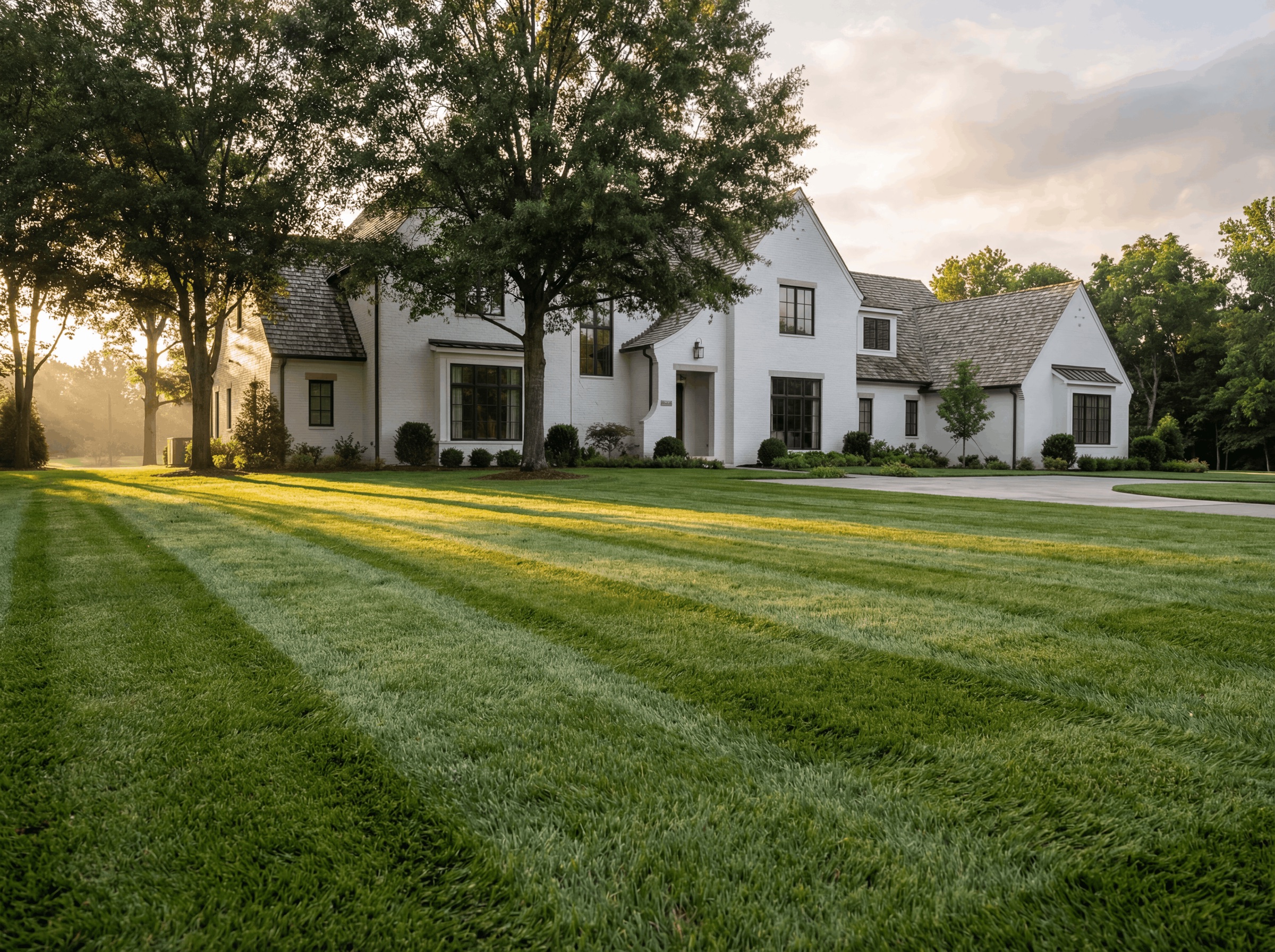
Pre-emergent before crabgrass.
Pure Turf fertilization and weed control timed to soil temperature, not the truck schedule. Slow-release nitrogen keeps growth even. Pre-emergent at 55° keeps weeds out for the whole season.
Crabgrass keeps its own calendar.
It wakes up when the ground is ready, not when a route calendar says so. Hit the window before that happens and the lawn stays clean. Miss it by two weeks and no post-emergent fully makes up the difference, the rest of the year turns into cleanup instead of prevention.
Three rules the calendar can't tell you.
- 01
Pre-emergent only works before germination.
Once a crabgrass seed wakes up, pre-emergent is over. The window in Middle Tennessee opens around Valentine's Day and closes by the first warm weekend in March. Miss it and you fight weeds all summer.
- 02
Slow-release nitrogen keeps growth even.
Quick-release granular feeds the lawn for two weeks then drops off. Slow-release fertilizer feeds for eight to ten weeks. The lawn grows at a steady rate, the mower likes it more, and you don't see the green-up flush.
- 03
Post-emergent is for what got through.
Pre-emergent isn't perfect. Spring rains, neighbors' lawns, dog tracks. Weed seeds still arrive. Post-emergent through April and May catches what germinated and stops it from setting seed.
Four moves, in order.
Treatment decisions follow the soil and the season, not the route sheet.
- a. Test
Soil pH and nutrient panel.
The first visit pulls a soil sample. pH between 6.0 and 7.0 is where Middle-TN turf wants to be. Below that, weeds win even with perfect timing. We lime as needed to get there.
- b. Pre-emergent
February, soil at 55°.
Pre-emergent goes down before crabgrass and goosegrass germinate. Split applications on Essential and Elite catch the late-emergence cohort that single-pass programs miss.
- c. Fertilize
Slow-release through the season.
Slow-release fertilizer applied four to six times per year depending on tier. Slow-release means the lawn pulls nitrogen as it needs it, not all at once. You see color, not the next mowing.
- d. Post-emergent
Spot-treated through summer.
Broadleaf weed control where we see it. Selective herbicides that target the weed, not the turf. We log every application on the same-day report so you know exactly what went down where.
Seven visits that hold the line.
- FebPre-emergentSoil temperatures approaching 55°. Pre-emergent goes down before crabgrass and goosegrass germinate. The visit that decides the rest of the year.
- MarEarly fert + postFirst feeding wakes the lawn from dormancy. Broadleaf weed control hits anything already up. Soil pH spot check.
- AprBalanced fertSecond pre-emergent split where called for. Full broadleaf application. Mowing height set for the season.
- May–JunColor + protectSlow-release nitrogen for color. Spot-treat any broadleaf that emerged through pre-emergent. Insect monitoring begins.
- Jul–AugHold the lineSoluble micronutrients for color through heat. Selective post-emergent on warm-season weeds. Hard mowing review.
- Sep–OctFall feedPre-aeration fertilizer. Late broadleaf application catches winter annuals before they set.
- NovWinterizeFinal winterizer fertilization. Last broadleaf cleanup. Mower decks lifted. Lawn handed off to dormancy in the best shape it's been in.
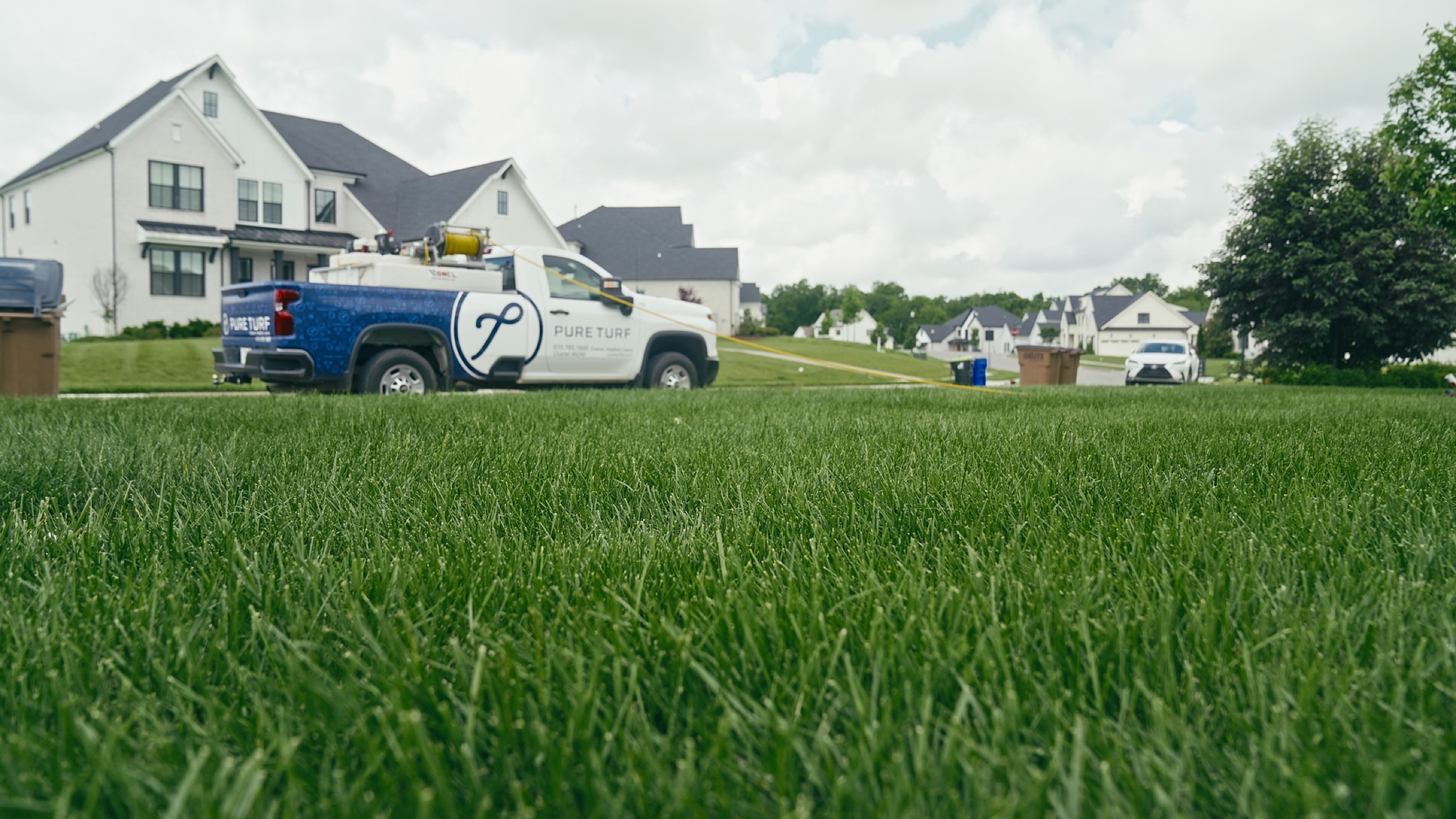
“Crabgrass-free for three seasons. Before Pure Turf, it was every August. The pre-emergent timing is everything.”
Treatment route, five counties.
Questions, answered straight.
Not on the list? Call 615.785.1849. Most calls are answered live.
When does pre-emergent actually need to go down?
What fertilizer do you use?
Will the weed control hurt my pets or kids?
How often does the route visit my property?
Can I do my own mowing and still get fertilization service?
What if I have warm-season turf instead of fescue?
February closes faster than you'd think.
Tell us where the property is. We'll soil-test on day one and have the first pre-emergent on the schedule before the window closes.